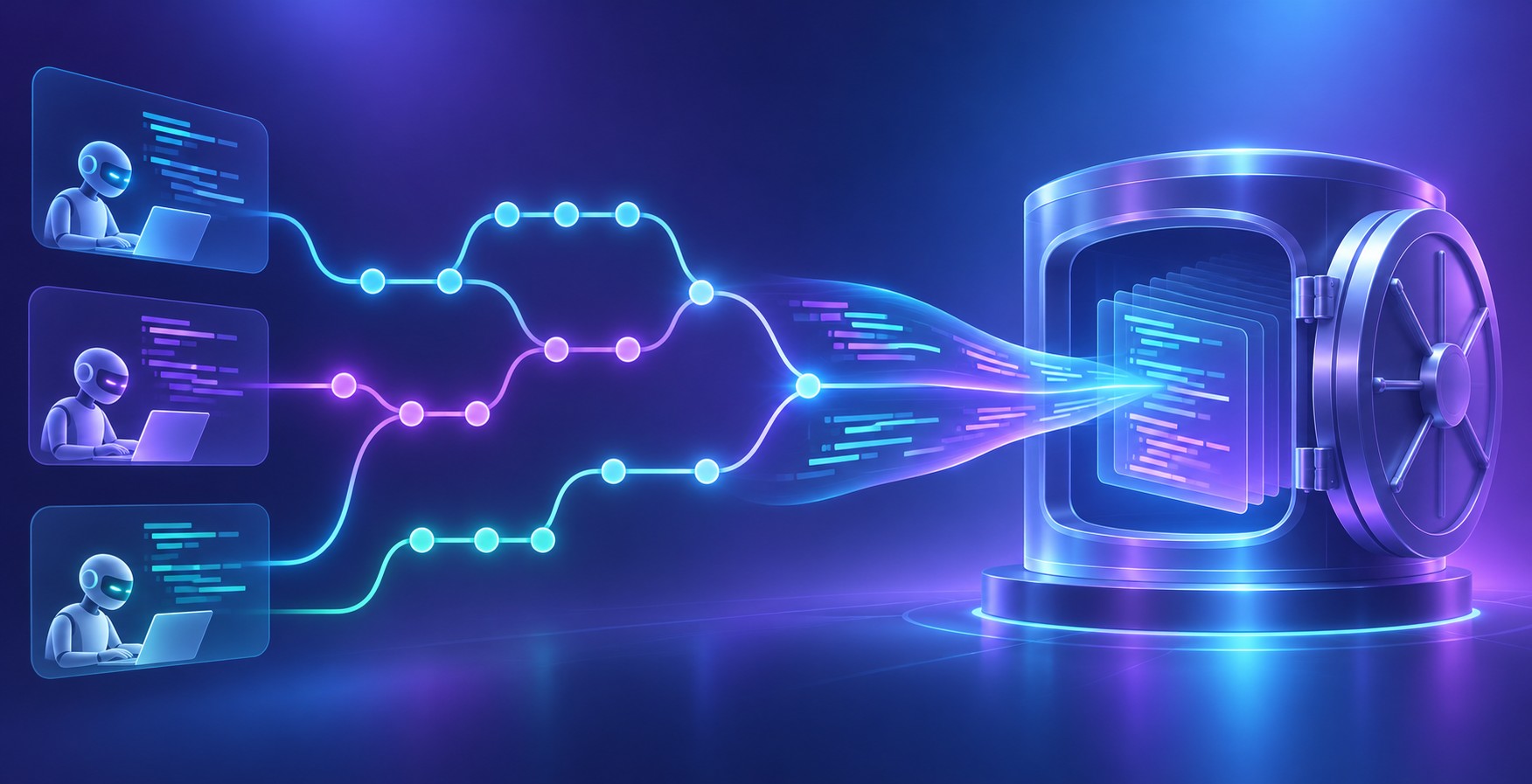
Codex wants to be where code is born and where it lives
OpenAI confirmed in an official announcement that it is acquiring Pierre Computer Company, the startup behind Code Storage and a set of open source tools already running inside Codex. Anyone who has browsed files or reviewed a change in the Codex app has already used Pierre's Trees and Diffs libraries without knowing it. Financial terms were not disclosed, and the deal's closing still depends on regulatory approval. Until then, both companies remain separate and independent.
The real problem behind the deal: Git was not built for agents
Git, the version control system that tracks a software project's history of changes, grew out of a community exchanging patches by email more than two decades ago. It was not designed for the volume of pushes, merges and fetches that AI agents generate when working in parallel. OpenAI itself reported, days before the announcement, that its internal monorepo saw reliability drop below 90% because of that bottleneck, and responded by building Pando, an in-house Git backend that cuts median push latency by nearly 80% and already moves almost a petabyte of data per day. Buying Pierre is the next step in that same logic, but aimed outward, straight into the product customers actually use.
What changes in practice for Codex users
Code Storage, Pierre's service that stores code and tracks its history using Git, supports repositories as large as 32 terabytes with at least 30 concurrent writes, plus SDKs for Python, Go and TypeScript and integration with GitHub, GitLab and Bitbucket. OpenAI plans to fold that service into Codex once the deal closes, turning the tool from a code-completion assistant into a full repository and review environment. Existing Code Storage customers keep normal access, and Pierre's open source projects stay open, with OpenAI pledging to keep contributing to them.
A direct shot at GitHub, with Microsoft on both sides of the table
The move puts OpenAI on a more direct collision course with GitHub, the code hosting platform owned by Microsoft. The rivalry has an odd angle because Microsoft itself owns roughly a quarter of OpenAI even as the two compete in other parts of the AI market. OpenAI is not alone in this race: Cursor launched its own GitHub alternative, Origin, in August, and former GitHub CEO Thomas Dohmke announced a competing product in October. The market's message is blunt: as agents write more and more code on their own, whoever controls the versioning infrastructure for that code gains a strategic position that will be hard to replicate later.
Real limit: the promise still depends on closing
None of this is live for end users yet. The acquisition depends on regulatory approval, and OpenAI gave no timeline for when Code Storage will actually show up inside Codex. For companies and automation teams already using Codex daily, the most concrete signal right now is directional: OpenAI is assembling, piece by piece, a full development platform rather than just a coding assistant. It is worth waiting for the integration announcement before reorganizing any workflow around it.
Sources
OpenAI: OpenAI to acquire Pierre Computer Company, Inc.; OpenAI: Scaling Git at OpenAI; The Verge: OpenAI is acquiring software startup Pierre Computer Company; DevOps.com: OpenAI Acquires Pierre Computer to Expand Codex, Challenge GitHub.